
Anatomy of the Lumbar Spine
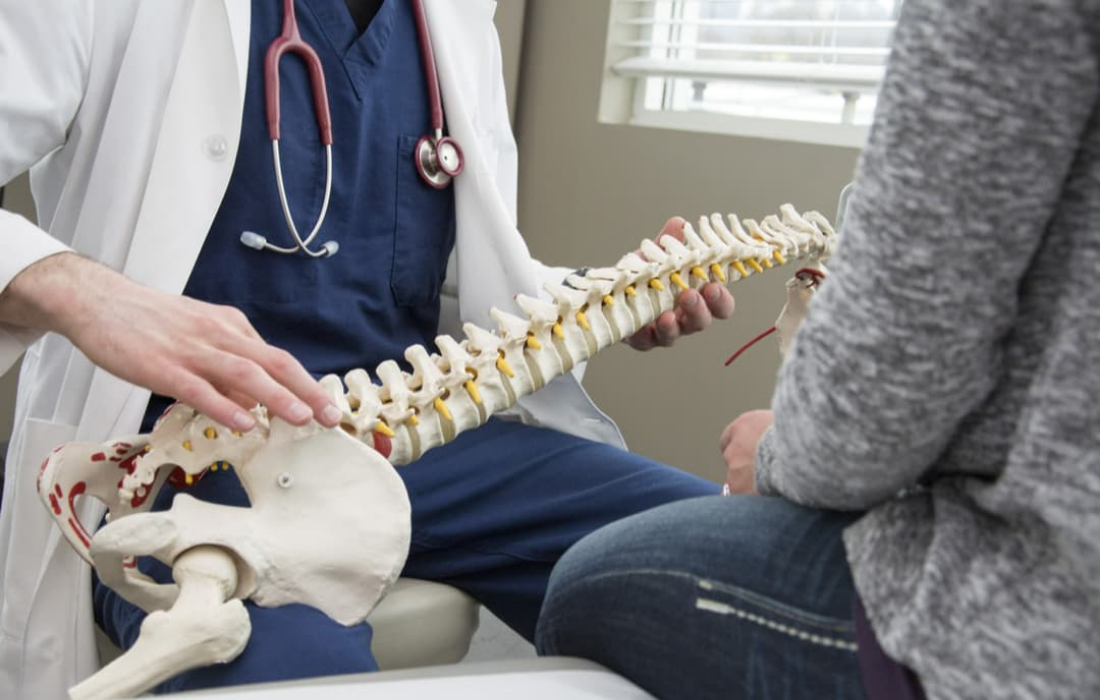
Your lumbar spine runs from L1 to L5, and it carries much of your daily load while still allowing motion. It also protects nerve roots that travel from the spinal canal into the legs.
A healthy spinal segment includes two vertebrae with a disc between them, plus facet joints and supportive ligaments. The disc itself has a tougher outer ring called the annulus and a softer center called the nucleus.
When a disc degenerates, the segment can become painful, especially in certain positions or with repeated stress. If disc material or nearby swelling irritates a nerve, symptoms can shift from back pain into buttock, thigh or calf discomfort.
What Is Lumbar Disc Replacement Surgery?
Lumbar disc replacement is a motion-preserving procedure where a surgeon removes a damaged lumbar disc and places an artificial disc implant in its place. The intent is to reduce pain from a worn disc while keeping some normal movement at that level.
Lumbar total disc replacement differs from fusion, which stops motion at the treated segment by encouraging bone to grow across it. University Orthopaedic Associates offers both options, and the right choice depends on your diagnosis, imaging and exam findings.
One of the most common questions is how lumbar disc replacement versus fusion compares, especially when both procedures are potential options. Fusion can help when instability drives pain or when other structural issues make a motion-preserving implant less appropriate. Disc replacement may fit best when pain comes mainly from one worn disc and the surrounding joints still look healthy.
How This Procedure Is Performed
Most lumbar artificial disc procedures use an anterior approach, meaning the surgeon reaches the spine from the front through the abdomen. This gives direct access to the disc space and helps preserve the back muscles.
Lumbar disc replacement typically follows the following sequence:
- You receive general anesthesia.
- The surgical team creates access to the front of the spine and carefully works around tissues and blood vessels.
- The surgeon removes the damaged disc and prepares the bony surfaces for the implant.
- The artificial disc is placed, and alignment is checked with imaging.
- The incision is closed, and early walking often begins soon after surgery.
If your symptoms relate more to a disc herniation that presses on a nerve, your surgeon may discuss other procedures such as microdiscectomy.
Who Is a Candidate for Lumbar Disc Replacement Surgery?
Not every back pain pattern points to a disc replacement. Candidate selection matters because the goal is pain relief with stable, durable motion.
In many practices, good candidates for lumbar disc replacement share the following features:
- Pain that appears primarily disc-related based on imaging, exam and response to conservative care.
- Symptoms that persist after a structured period of nonsurgical treatment, such as physical therapy, guided activity changes and targeted injections when appropriate.
- Disease limited to one, sometimes two lumbar levels, with no major instability.
- Facet joints that still function well, since these joints help guide motion at that level.
Some findings can push the decision away from disc replacement and toward other options. Significant instability, advanced arthritis in the facet joints or certain alignment issues can make a fusion or decompression procedure more appropriate. Your evaluation may include X-rays, MRI and sometimes other testing, so the care plan matches what is driving pain.
Lumbar Disc Replacement Recovery
Recovery after lumbar disc replacement tends to progress in phases, and it can feel uneven at times. The first goal is safe mobility, then gradual return to daily activity, then strength and endurance work that protects the surgical level.
Patients often stay in the hospital for about 1 to 3 days after lumbar artificial disc replacement, depending on pain control and function.
From there, your plan usually includes:
- Short, frequent walks early on, increasing distance as tolerated.
- Clear limits on lifting, bending and twisting based on your surgeon’s instructions.
- A staged return to work that depends on job demands.
- Physical therapy when your team feels the incision and early healing milestones support it.
Some people feel meaningful improvement quickly, while others need a longer ramp-up before the back feels steady. If pain changes suddenly, leg symptoms worsen or you develop new weakness, that is not a wait-and-see moment. Contact your care team.
Schedule a Spine Evaluation
If you have disc-related low back pain and want a clear surgical opinion, our experienced spine specialists at UOA will help you identify the most effective procedure for your needs. Our team has performed more than 8,500 spine procedures, offering both motion-preserving care and fusion when needed.
To talk with our lumbar disc replacement surgeons about whether lumbar disc replacement surgery fits your case, request an appointment. You can access care across New Jersey, including offices in Somerset, Princeton, Wall, Woodbridge and Morganville.