
Back to the Canvas: Dan Finaldi’s Recovery After Rotator Cuff Surgery
“I’m an artist. I have to have my arm back.”
For Dan Finaldi, using his right arm is inseparable from the work he loves. The recently retired Freehold High School art teacher spent 25 years in the classroom and continues to paint and draw professionally. So, when a shoulder injury became progressively worse, he worried about what it could mean for his art.
The trouble began three or four years ago during a boxing fitness class. Dan felt pain in his shoulder after striking a bag, but kept going. By that night, the discomfort was affecting his sleep. After researching local orthopaedic physicians, he scheduled an appointment with James T. Monica, MD, at University Orthopaedic Associates.
Dan was immediately struck by Dr. Monica’s calm, considerate manner. Because Dan still had strength in the shoulder, Dr. Monica first recommended physical therapy and continued monitoring before considering surgery. That approach worked for a time. However, a hard fall in New York City aggravated the injury, and an MRI later confirmed a tear. Another round of treatment and therapy again brought relief.
Then came another setback. While helping rescue his dog from beneath a pier at Lake Placid, Dan slipped on a wet landing and dislocated the same shoulder. Months later, he reached up to pull down a classroom screen and felt a sudden, intense tearing sensation. A new MRI showed that the tendon was about 90 percent torn. At that point, Dr. Monica recommended surgery.
Dan had never undergone surgery and was frightened, particularly by the thought of losing function in the arm he used to create. On the day of the procedure, he told Dr. Monica, “I’m an artist. I have to have my arm back.”
“You’re in good hands,” Dr. Monica assured him. “I’m going to take good care of you.”
Dan underwent rotator cuff surgery on April 21. The early days of recovery were difficult. Once the nerve block wore off, pain and sleepless nights followed. Unable to get comfortable in a bed, recliner or armchair, he began thinking about how he would manage the emotional strain of being unable to work normally.
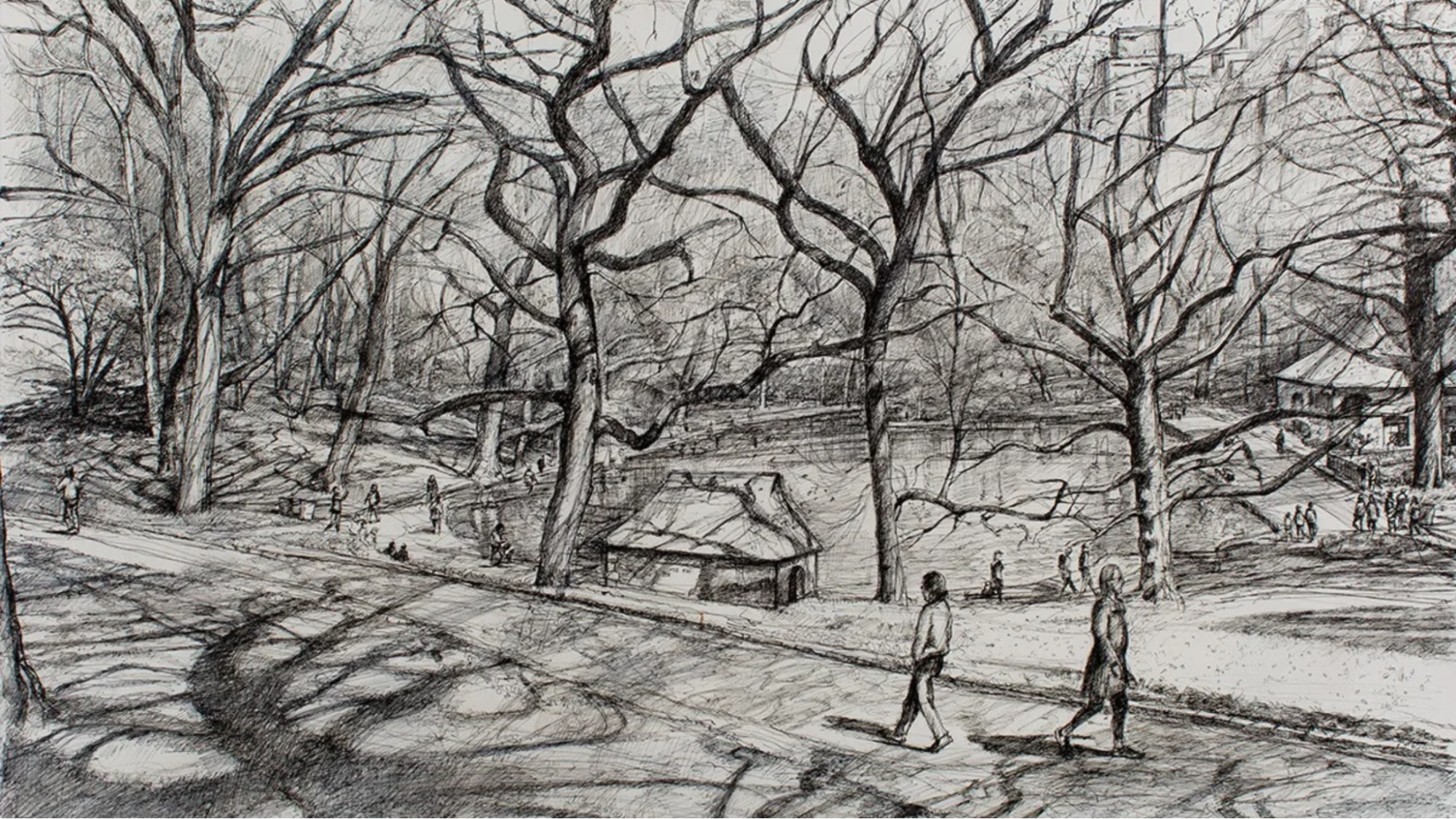
With Dr. Monica’s permission, Dan found a way to create while keeping his shoulder protected in its sling. He started a large pen drawing using light movements of his wrist and forearm. Since he could work within only a small area, he rolled the paper like a scroll and completed it section by section.
The process took weeks, yet it gave him something meaningful to focus on. Dan described drawing as therapeutic “emotionally, spiritually, mentally.” The finished piece now hangs in the Soho gallery that represents his work, and a collector has expressed interest in buying it.
Physical therapy gradually restored Dan’s motion and strength. Once the sling came off, progress seemed to gather pace. By the time of his interview, he had advanced to exercises using two- to five-pound weights and was reportedly about two weeks ahead of schedule. He had regained a strong grip, returned to three- and four-hour painting sessions and no longer had shoulder pain. He also continued his daily walking routine, often covering 16,000 to 17,000 steps.
Looking back, Dan is grateful for the clinical skill that repaired his shoulder and the kindness that helped him face surgery with confidence. “He’s sincere. He cares,” Dan said of Dr. Monica. “I felt like I wasn’t just a patient. I felt like he was almost like family.”
University Orthopaedic Associates provides care for shoulder injuries, including rotator cuff tears. If shoulder pain or limited movement is interfering with your daily life, contact UOA to request an appointment and discuss your treatment options.